

Endometriosis Clinic in Chicago, IL
Endometriosis is a chronic, painful condition where tissue similar to your uterine lining grows outside the uterus, often driven by complex factors like genetics, immune system disorders, or hormonal imbalances. Because this condition can severely impact your daily routine and fertility, Dr. Michelle Trandai, MD, provides care to accurately diagnose the root cause of your pelvic pain and develop a highly personalized treatment plan. Visit us today to explore effective medical or minimally invasive management options, find lasting relief, and confidently reclaim your overall quality of life. Contact us for more information or request an appointment online. We are conveniently located at 5449 N Broadway, Chicago, IL 60640.
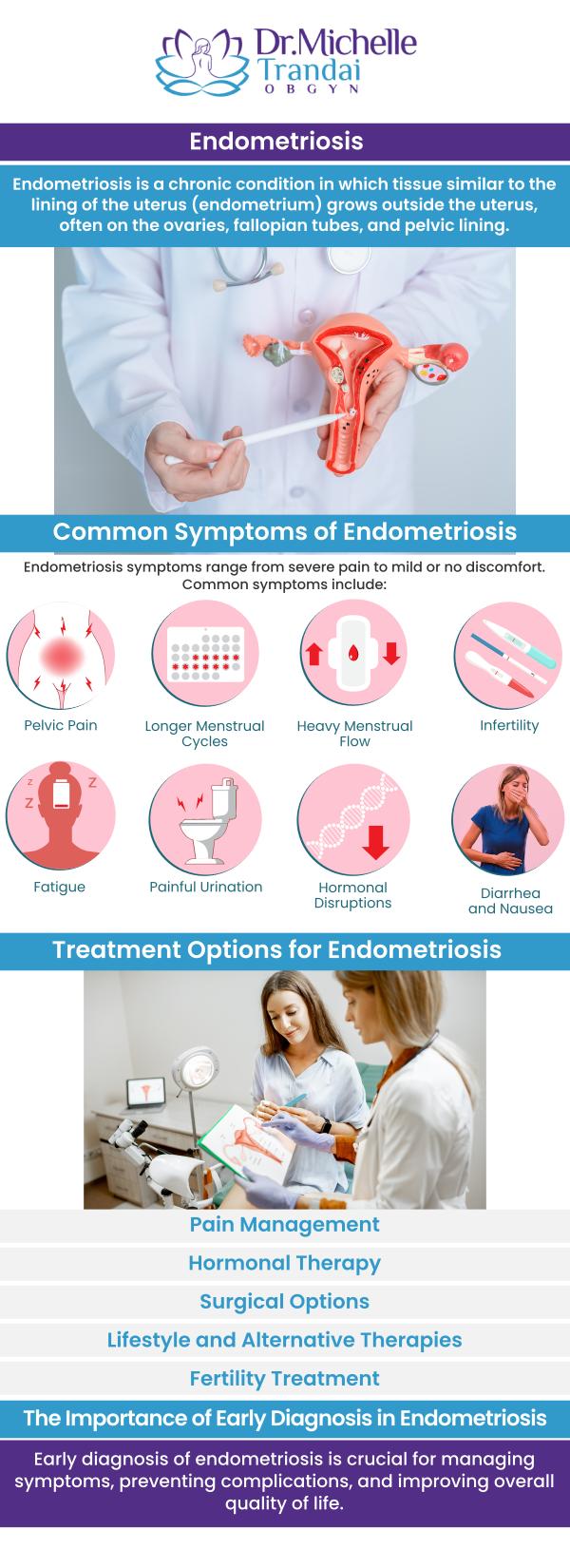
Table of Contents:
How do they test you for endometriosis?
What age can you get endometriosis?
What does endometriosis feel like?
What can make endometriosis pain worse?
Finding Relief from Endometriosis with Dr. Michelle Trandai, MD
Diagnosing endometriosis is not plain and simple, it can be quite complicated if the patient isn’t forthcoming with their symptoms or what they may have been experiencing, or if the doctor if checking into other aspects and not focused on endometriosis as one of the issues.
Normally, endometriosis causes a patient pelvic pain and bleeding, this can happen during your menstrual cycle or not, another reason why it is so critical to track your symptoms.
When you go in for an appointment to talk about the issues you are having, your doctor will ask questions mainly about your symptoms in descriptive detail, the location of the pain you are suffering from and when it normally occurs.
Your doctor will also run a few exams to check for clues of endometriosis, they include:
– Physical exam
Physical exam includes a pelvic exam, this is when the doctor will manually feel the areas around your pelvis for any abnormalities.
– Ultrasound
Ultrasounds use high-frequency sound waves to create images of the inside of your body. This is done to capture photos for the doctors to view, the ultrasound device will be pressed up against either your abdomen or inserted into your vagina, whichever offers a better view. Ultrasounds can show cysts which are usually associated with endometriosis, this is what the doctor will be looking for from an ultrasound.
– Magnetic resonance imaging (MRI)
Magnetic resonance imaging uses a magnetic fields and radio waves to create a detailed picture of the organs and tissues within your body. This can help with surgical planning if needed, and provide more detail into the location and size of the endometrial implants.
– Laparoscopy
Depending on your symptoms, the doctor may refer you to a surgeon for the procedure, this will allow the surgeon to view the insides of your abdomen while you are under general anesthesia. The surgeon will create a small incision near the navel and insert a tiny viewing instrument to look for signs of endometriosis tissue outside the uterus.
Endometriosis does not discriminate; it can affect women across all ethnic backgrounds as well as of any age. It is most common however for women of the reproductive age which is normally between 25 to 35 years old to commonly deal with endometriosis.
Due to how complicated it can be to diagnose endometriosis, many times it goes undiagnosed within women.
Women are usually no stranger to pains that often occur at least once a month, these pains are followed by bleeding for around a week, and everything goes back to normal. While cramping can be tough, endometriosis is another story all together, the pain can be intense to the point it starts to affect your daily life. For many, as they age their symptoms and pain from endometriosis gets worse if not diagnosed correctly and treated properly.
Other endometriosis symptoms include:
– Long or heavy periods
– Severe cramping
– Severe migraines
– Severe lower back pain during your period
– Pain when you go to the bathroom
– Allergies which get worse around your menstrual cycle
– Vaginal bleeding between your periods
– Blood found in your urine or from the rectum
– Tired
– Nausea
– Diarrhea
– Constipation
– Bloating
– Issue getting pregnant
It is noted that endometriosis can cause pain in more than one area of your body at once.
Endometriosis offers no cure; however, it does provide a comprehensive care management. Proper care for endometriosis includes a pain management plan and a healthy lifestyle change with good nutrition and exercise.
Lifestyle choices including foods can increase your risk of developing endometriosis, but also make it worse. The following negatively influence endometriosis:
– High trans-fat diet
– High red meat consumption
– Gluten
– High-FODMAP foods.
Living with the chronic pelvic pain and unpredictable symptoms of endometriosis can be deeply frustrating, but you do not have to manage it alone. Dr. Michelle Trandai, MD, provides compassionate, expert care in Chicago to help you uncover the root causes of your discomfort and reclaim your daily life.
– Understanding the Causes: Endometriosis occurs when tissue similar to the lining of the uterus grows outside of it. While the exact cause is still being researched, several key factors frequently contribute to its development:
– Retrograde Menstruation: Menstrual blood containing endometrial cells flows backward through the fallopian tubes into the pelvic cavity instead of leaving the body.
– Cellular Transformation: Hormones or immune factors may transform normal cells lining the abdomen into endometrial-like cells.
– Genetics & Immune Factors: A family history increases your risk, and an impaired immune system may fail to recognize and destroy displaced endometrial tissue.
– How Professional Help Makes a Difference: Because endometriosis symptoms closely mimic other pelvic conditions, securing an accurate diagnosis from an experienced specialist is essential. Dr. Trandai offers a highly personalized approach to your care:
– Advanced Diagnostics: Utilizing thorough pelvic exams, specialized ultrasounds, or minimally invasive laparoscopy to pinpoint the exact location and severity of the tissue growth.
– Customized Medical Therapy: Prescribing targeted hormonal treatments to slow tissue growth, reduce inflammation, and manage severe, disruptive cramping.
– Minimally Invasive Solutions: Offering precise, conservative surgical options to carefully remove endometrial lesions while prioritizing your long-term reproductive health and family planning goals.
Taking the first step toward managing your endometriosis can dramatically improve your overall quality of life. Contact us for more information or request an appointment online. We are conveniently located at 5449 N Broadway, Chicago, IL 60640. We serve patients from Chicago IL, Edgewater IL, Evanston IL, Ravenswood IL, Uptown IL, Lake View IL, Lincoln Park IL, Buena Park IL, Bowmanville IL, Boystown IL and Roscoe Village, IL.
Check Out Our 5 Star Reviews




 How May I Help You?