

What Causes Endometriosis and How Serious Can It Be?
Endometriosis is a complex condition often linked to genetics, retrograde menstruation, or immune system disorders that cause uterine-like tissue to mistakenly grow outside the uterus. While the severity varies from patient to patient, untreated endometriosis can become highly serious—leading to debilitating chronic pelvic pain, internal scarring, and significant fertility challenges that deeply impact your daily life. By partnering with Dr. Michelle Trandai, MD, for compassionate care, you can secure an accurate diagnosis and a highly personalized treatment plan to protect your long-term reproductive health and reclaim your well-being. Contact us for more information or request an appointment online. We are conveniently located at 5449 N Broadway, Chicago, IL 60640.
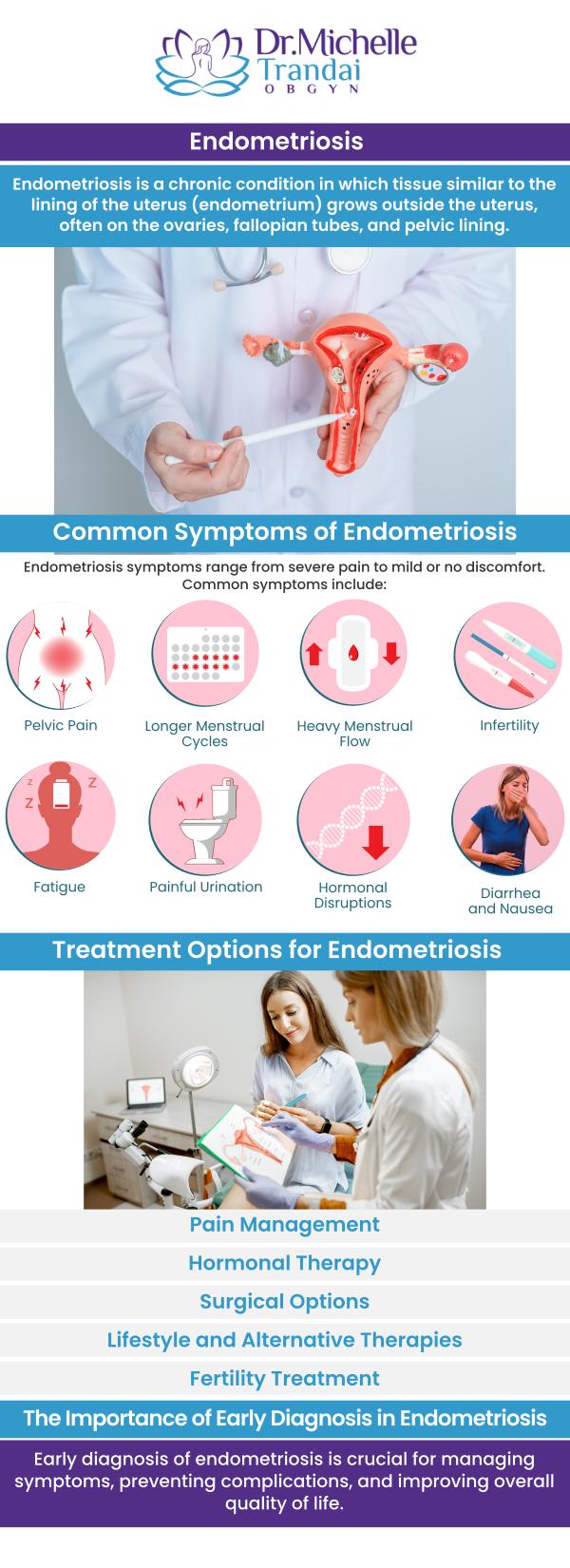
Table of Contents:
What are the symptoms of endometriosis?
What causes endometriosis?
How serious is endometriosis?
What are the stages of endometriosis?
Understanding Endometriosis: Causes, Severity, and Care With Dr. Michelle Trandai, MD
Endometriosis symptoms can be different in each individual; however, some of the most common symptoms for endometriosis may include:
– Pain can be quite relevant when you are having menstrual cramps and can be felt more so in the abdomen or the back
– Pain during intercourse
– Abnormal or heavier than normal menstrual flow
– Fertility issues
– Pain while urinating during your menstrual cycle
– Pain while passing a bowel movement during your menstrual cycle
– Gastrointestinal issues including diarrhea, constipation, and/or nausea
The amount of pain each female may experience is not related to the severity of the disease, as some women with severe endometriosis may experience pain but on quite a mild level compared to others whose severity level is not quite as high.
The exact cause of endometriosis is not entirely clear; however, researchers are continuing to look into the reasoning of how endometriosis is caused, they have some probable causes which include:
– Menstrual period flow problems
Researchers have found that retrograde menstrual flow is one of the main likely causes of endometriosis. They have noted due to the tissue shedding during the period flow, it moves through the fallopian tubes and can manage to end up in other areas of the body on its way out, including the pelvis.
– Genetic factors
Genetically, you may have endometriosis run in the family, which means you could inherit endometriosis throughout many generations.
– Immune system problems
Every individual has an immune system and unfortunately, some may deal with an immune system that does not work properly, due to this, it can fail and destroy the endometrial tissue that grows outside of the uterus. Certain cancers and immune system disorders are more commonly found in women who also have endometriosis.
– Hormones
From what researchers have gathered, the estrogen hormone is what appears to promote endometriosis. They are reviewing whether endometriosis is a tissue within the body’s hormone system or not.
– Surgery
Surgeries that have occurred to the abdominal area like a c-section, a hysterectomy, or other abdominal surgeries could have accidentally picked up and moved the endometrial tissue which can be a likely cause of endometriosis.
Endometriosis can be quite painful, and cause many severe symptoms that can be uncomfortable, and unwelcoming by many. Others may not experience any symptoms, as they may be asymptomatic. While it is a painful condition that can affect the quality of life you experience, it is not a fatal disease. There are some rare instances where complications of endometriosis have occurred which can cause potentially life-altering or threatening issues; however, most when they bring up the symptoms to their doctors and have all of the proper testing completed, will get the appropriate treatment and they can move on with their life.
There are four stages when it comes to the severity of endometriosis, which stage you may be classified as will depend on the location, amount, depth, and size of the endometrial tissue that your doctor finds and can diagnose you from there.
Stage 1: Minimal
Stage 2: Mild
Stage 3: Moderate
Stage 4: Severe
The specific criteria in which your doctor will be able to classify you for a diagnosis and then provide a specific treatment will go off of:
– Extent and spread of the endometrial tissue
– Involvement of pelvic structures within the disease
– The extent of pelvic adhesions
– If there is any blockage of the fallopian tubes
As stated above, the stage at which you may be diagnosed for endometriosis does not reflect the level of pain you may experience with endometriosis, risk of infertility, or other symptoms. As it is possible that a woman with stage 1 may experience severe pain, while a woman with stage 4 may experience nothing.
Endometriosis is a gynecologic condition in which tissue similar to the lining of the uterus grows outside the uterus and may contribute to pelvic pain, painful periods, heavy or irregular bleeding, discomfort during intercourse, or fertility concerns. The condition can affect women differently, and the severity of symptoms does not always correspond to the extent of endometriosis. Dr. Michelle Trandai, MD, provides personalized endometriosis care in Chicago, IL, taking time to understand each patient’s symptoms, health history, and reproductive goals. With more than 20 years of OB/GYN experience, Dr. Trandai focuses on thorough evaluation, clear education, and individualized care planning to help women better understand their condition and explore appropriate treatment options. Contact us for more information or request an appointment online. We are conveniently located at 5449 N Broadway, Chicago, IL 60640. We serve patients from Chicago IL, Edgewater IL, Evanston IL, Ravenswood IL, Uptown IL, Lake View IL, Lincoln Park IL, Buena Park IL, Bowmanville IL, Boystown IL and Roscoe Village, IL.
Check Out Our 5 Star Reviews




 How May I Help You?