
Fibroids Treatment Specialist in Chicago, IL
Finding lasting relief from uterine fibroids requires a precise evaluation and a care plan tailored specifically to you. Whether your goal is symptom management, fertility preservation, or exploring advanced minimally invasive treatment options, receiving specialized care makes all the difference. Consult Dr. Michelle Trandai in Chicago, IL, to undergo a thorough diagnostic assessment and establish an individualized fibroid treatment strategy today. Contact us for more information or request an appointment online. We are conveniently located at 5449 N Broadway, Chicago, IL 60640.
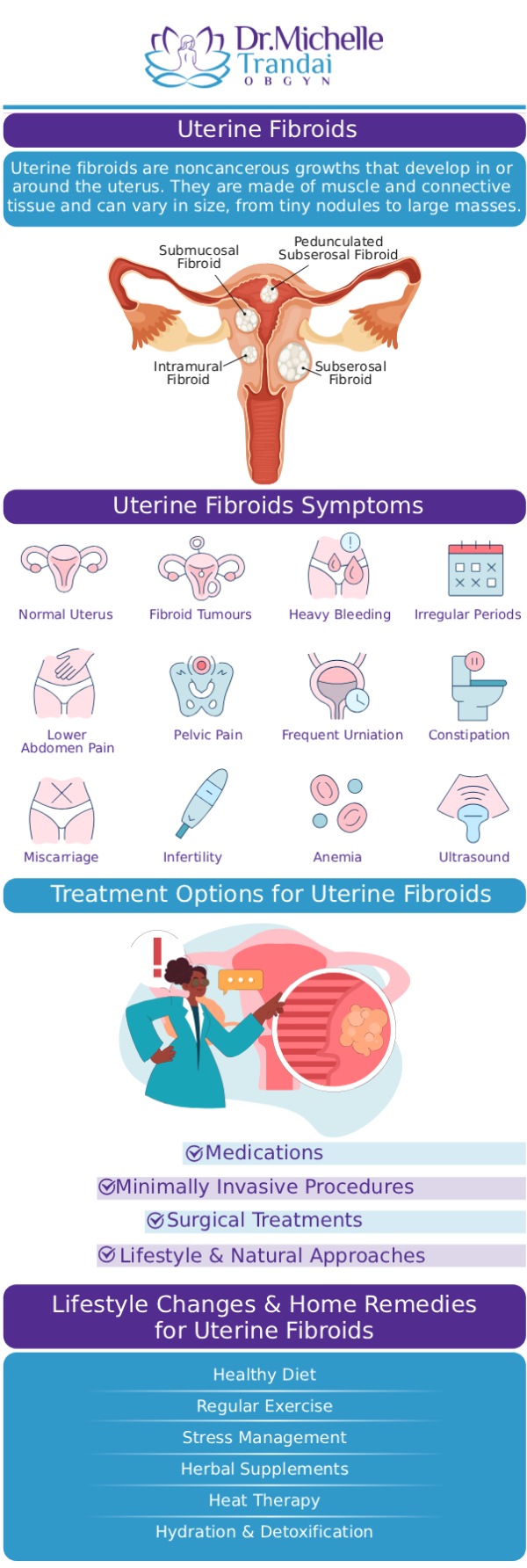
Table of Contents:
What are fibroids?
Can fibroids affect pregnancy?
What are the symptoms of uterine fibroids?
How are uterine fibroids treated?
Relief from Pelvic Pain and Heavy Periods: Tailored Fibroid Care at Michelle Trandai, MD
Fibroids are known as noncancerous growths located in the uterus that often appear during a female’s childbearing years. Uterine fibroids do not increase a female’s risk of uterine cancer and nearly never develop into cancer.
Uterine fibroids can range in size from seedlings and be undetectable unless using a magnifying glass, to large bulky masses that can enlarge the uterus. Females can have a single uterine fibroid or multiple fibroids which will expand the uterus even more to the point that it can reach the females ribcage and add additional weight.
Women can have many uterine fibroids throughout their life and do not even know they have, often due to uterine fibroids not showcasing any symptoms. However, this does not mean they will not be noticed, as your doctor may discover uterine fibroids during a pelvic exam or a prenatal ultrasound.
Many women will never experience any issues from their uterine fibroids during pregnancy; however, it isn’t that way for everyone. Some females may develop complications due to uterine fibroids during pregnancy, some of the most common complications are pain. These complications include:
– Fetal growth restriction
– Placental abruption
– Preterm delivery
– Cesarean delivery
– Breech position
– Miscarriage
Females who have uterine fibroids often do not showcase any symptoms; however, in the ones that do, these symptoms can be influenced by location, size, and the number of fibroids.
Women who do showcase symptoms often show these most common signs and symptoms of uterine fibroids, which are:
– Heavy bleeding during your period
– Periods lasting longer than a week
– Pelvic pain or pressure
– Constant urination
– Difficulty when emptying the bladder
– Constipation
– Back pain or leg pain
It is rare but a uterine fibroid can cause acute pain like back pain, especially when it begins to outgrow its blood supply and starts to die.
Uterine fibroids are named after the location in which they are discovered, fibroids found in the uterus are called uterine fibroids, but you can have fibroids grow in other areas of the body as well including within the muscular uterine wall, which is known and intramural fibroids. Females can also have a bulge form into the uterine cavity which is called a submucosal fibroid, and fibroids that project to the outside of the uterus are known as subserosal fibroids.
It is highly recommended you visit your doctor if you notice the following:
– Pelvic pain that is not going away
– Heavy, prolonged, or very painful periods
– Bleeding or spotting that occurs between periods
– Have issues emptying out your bladder
– Unexplained low red blood cell counts which is known as anemia
While there is no one single approach to uterine fibroid treatment that is commonly used by all doctors, it is best to talk to your doctor, and depending on the symptoms, your doctor may recommend one of the following:
– Medications
Medications can be prescribed by your doctor to target the fibroids hormones that regulate your menstrual cycle, they treat any symptoms you may be experiencing from uterine fibroids including heavy menstrual bleeding and pelvic pain or pressure.
– Non-invasive procedures
Non-invasive procedures are completed with an MRI-guided ultrasound technique. The high-energy ultrasound transducer will provide an image to your surgeon of the precise location of the uterine fibroids, they are then targeted and sound waves will be pushed towards the fibroid to heat then destroy small areas of the fibroid tissue.
– Minimally invasive procedures
Minimally invasive procedures are available to help destroy uterine fibroids without removing them like you would have done in traditional surgery methods. These minimally invasive procedures include:
– Uterine artery embolization
– Radiofrequency ablation
– Laparoscopic or robotic myomectomy
– Hysteroscopic myomectomy
– Endometrial ablation
– Surgical procedures
There are of course traditional surgery procedures available for uterine fibroids including:
– Abdominal myomectomy
– Hysterectomy
Pelvic pain and heavy periods caused by fibroids can affect your daily comfort, energy, and overall quality of life. Michelle Trandai understands that every woman’s experience with fibroids is different. Our approach focuses on evaluating your symptoms, health history, and personal goals to help create a care plan tailored to your individual needs.
Michelle Trandai provides compassionate women’s health care to help patients better understand fibroid-related concerns and explore appropriate management options. Through personalized discussions and thorough evaluations, she helps women address symptoms such as heavy menstrual bleeding, pelvic discomfort, and other concerns while prioritizing their overall wellness.
With a patient-centered approach, Michelle Trandai is dedicated to providing supportive and individualized fibroid care. By focusing on your unique health needs and concerns, our team helps you make informed decisions and take confident steps toward improved comfort and well-being. Contact us for more information or request an appointment online. We are conveniently located at 5449 N Broadway, Chicago, IL 60640. We serve patients from Chicago IL, Edgewater IL, Evanston IL, Ravenswood IL, Uptown IL, Lake View IL, Lincoln Park IL, Buena Park IL, Bowmanville IL, Boystown IL and Roscoe Village, IL.
Check Out Our 5 Star Reviews




 How May I Help You?